 Kizzuna
Kizzuna
Kizzuna
Our speaking events aren't presentations. They're conversations — led by people the same age as your students, about something every kid is already living.
Inside the Event
We open with a story — something personal and true — that earns laughter before it earns anything else. The goal in the first five minutes is simple: make the room feel safe enough to be honest.
Then we go back — before the phone. We talk about the spaces childhood used to have, the free play and third places and boredom that shaped who people became. And we ask what happened to them. By the time we get to phones, students aren't defensive. They're curious.
We ask real questions. We leave real space for silence. We close with a call toward something — not a command, not a list of rules. Just an invitation to look at things differently.
See It in Action
A short clip from a recent campus event.
Filmed live on campus — real students, real conversation.
45–60 min
Our signature speaking event — personal narrative, key research, audience interaction, and a closing reflection. Best for campus-wide events, student union bookings, and large residence hall sessions. Works in rooms of 50–500 students.
2–2.5 hrs
The full experience — screen Disconnected, then transition into a live conversation with the filmmakers. The film does the emotional groundwork; the talk opens the room for real dialogue. Our most requested format.
50–75 min
A more intimate, discussion-heavy format designed for courses in communication, psychology, media studies, public health, or student development. Includes framing for academic discussion.
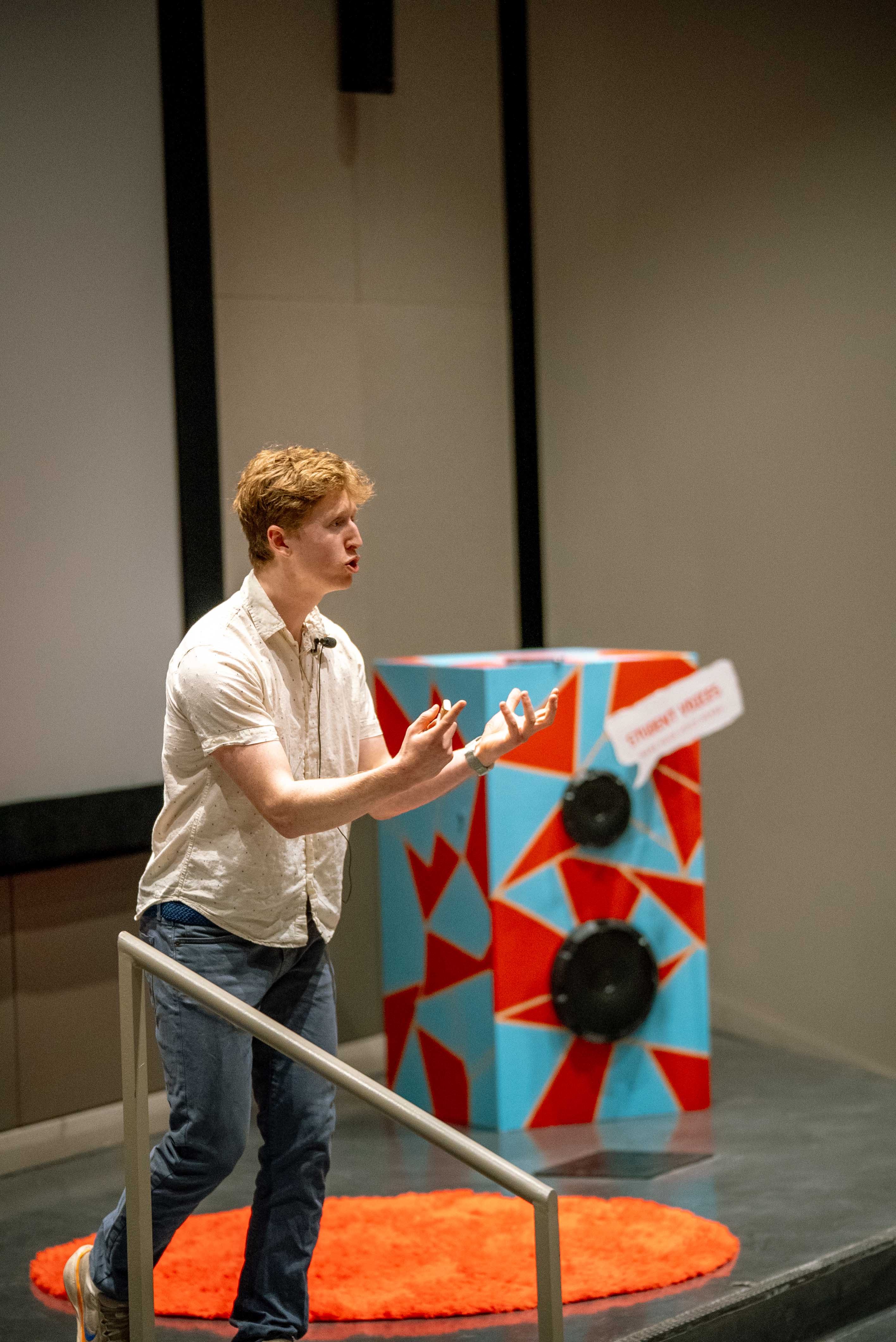
On the TEDx Stage
Ben's talk on growing up online.
What We Cover
Three ideas anchor every event. Around them sit six more you can prioritize — so administrators shape the talk around what their campus needs most.
Tap any topic to learn more
Build Your Engagement
Pick the three issues weighing heaviest on your campus. In about ten seconds we'll build a tailored outline of what a Kizzuna engagement could look like for your students.
Choose up to 3 0 / 3 selected
Campus Responses
"There is truly no substitute for hearing from someone in Gen Z about these issues."
Allen-Stevenson, NYC
"The best presentation we've ever had."
CSN School
"Truly resonated with my students."
Teacher, Fairview High School
FAQ
If yours isn't here, reach out. We're responsive and happy to talk through your specific event context.
We recommend reaching out at least 6–8 weeks before your desired event date. For high-demand windows like fall orientation, Mental Health Awareness Week (May), and spring semester kickoff events, booking 3–4 months ahead gives you the best availability. That said, we do accommodate shorter timelines when possible — so reach out even if you're working fast.
We've performed for groups of 20 and groups of 500+. The sweet spot for the Core Talk is 80–300 students — large enough to feel like a real event, intimate enough for genuine conversation. The Deep Dive format works best with 20–100. Film + Talk works at nearly any size. We'll advise on what format fits your room.
For the Core Talk: a microphone (handheld or lapel), a screen or projector, and a laptop connection (HDMI preferred). For Film screenings: stereo audio through the venue PA is important — we'll send tech specs in advance. We've made things work in rooms that weren't ideal. Just tell us what you have and we'll figure it out.
Yes. Our events are designed to be non-clinical, non-threatening, and emotionally accessible. We are careful to avoid language that pathologizes normal behavior, and we don't dramatize negative outcomes. Students who are actively struggling often find the most resonance with our content — because it validates their experience without amplifying distress. We recommend connecting with your campus counseling center in advance so staff are available if students want to talk afterward.
Absolutely. We do a pre-event call with your programming contact to understand your student population, the context of the event, and any specific themes or moments you want us to address. We have adapted content for first-generation students, student-athletes, honors programs, Greek life chapters, and international student populations.
We provide a promotional toolkit: social graphics, a poster template, and recommended copy for email and campus announcement channels. Events that perform best pair early social promotion with in-person word of mouth through RAs, student leaders, and professors who can mention it in class. We also recommend framing it as "made by students your age" — that phrasing consistently increases walk-in attendance.
Yes, and we prioritize accessibility. We offer flexible rates for community colleges, HBCUs, tribal colleges, and institutions with limited programming budgets. Reach out and we'll discuss what's possible.